
Sex Offender Checks in Lincoln County
The Colorado Bureau of Investigation manages the Colorado Sex Offender Registry in the Colorado Crime Information Center and publishes a limited web version. Search that official portal for Lincoln County results. CBI says its online data is updated hourly, yet timing, mapping, residence, completeness, and identity-match limits still apply.
The web list contains only categories that Colorado law makes public online. It includes sexually violent predators, adults with multiple qualifying sexual or violent felony convictions, adults failing to register for felony sex offenses, and adults convicted of a felony sex offense who are registered locally. It excludes people listed only for misdemeanor convictions and juvenile adjudications. An empty result is not proof that no registration record exists.
Lincoln Registry Is a Subset
Colorado offers a separate written route for a complete compliant-adult list. A requester may specify the state or an area such as Lincoln County, submit the official adult list form, and pay $20. CBI states that it responds within 10 business days. This product reaches beyond the narrower set shown on the public website.
A juvenile request is different. It must name the juvenile and state the requester’s need. The requester must affirm that the information will not be published, used to harass, or used for a prohibited financial purpose. Full name is required, while date of birth, county, case, and gender may help identify the intended record. The named-juvenile request is free.
The official Colorado registry entry page presents the user agreement before the search area.
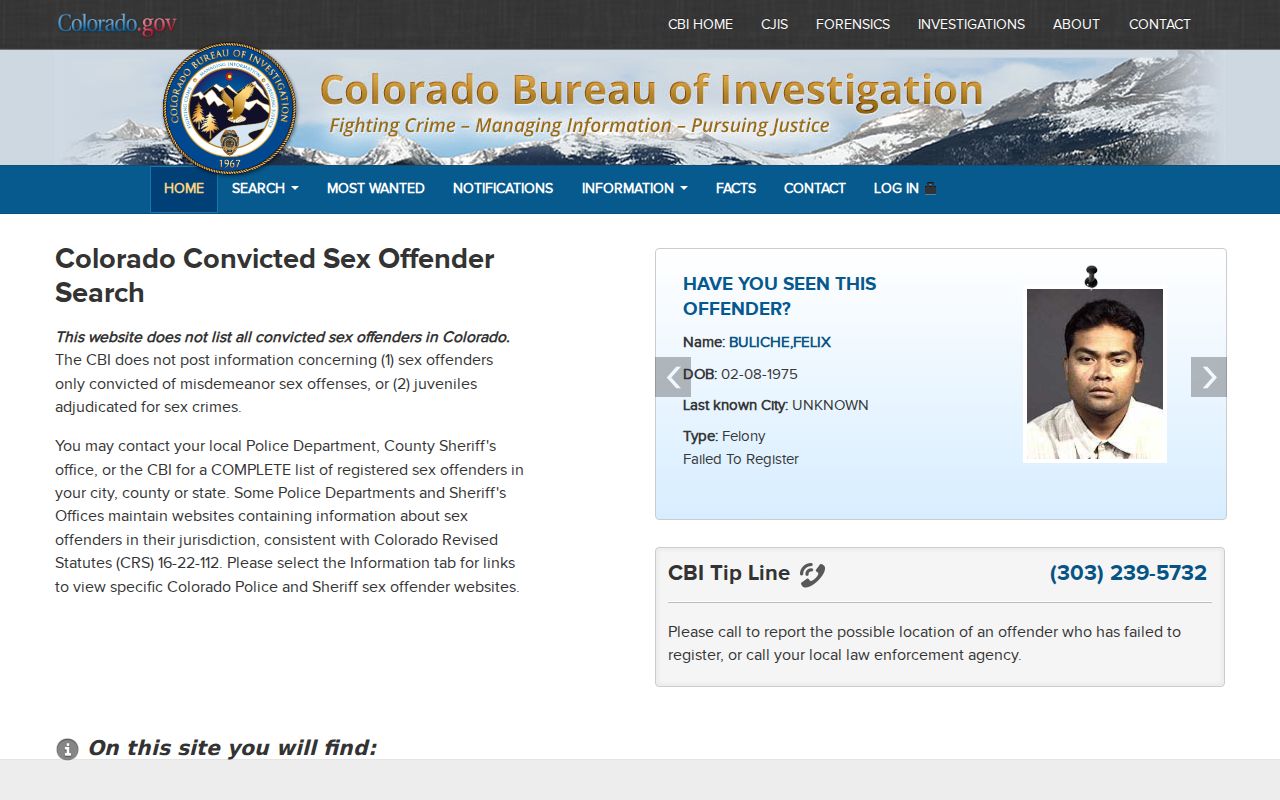
This gate sets the lawful-use terms before a Lincoln County search begins and helps distinguish the state portal from unofficial copies.
How to Search Colorado Registry
Begin with only the facts you know. Name matching is not biometric, and reported location data can change. When several results look alike, compare profile details without assuming that a shared name proves identity.
- Open the CBI registry and accept its user agreement.
- Search by last name, then add first name, or choose Lincoln in the county field. City, ZIP, and location-map controls can narrow a geographic search.
- Review the qualifying result set and compare the reported county and physical descriptors.
- Open the profile, note when its information was reported, and contact law enforcement if an urgent safety concern exists.
| Field or control | Type | Required | Use |
|---|---|---|---|
| Accept user agreement | Button | Yes | Opens the restricted search area |
| Last name | Text | Search-dependent | Name matching is not fingerprint verification |
| First name | Text | No | Narrows a surname search |
| City or ZIP | Text or select | No | Uses the location reported to CBI |
| County | Select | No | Choose Lincoln for county filtering |
| Address or map | Text and map | No | Mapped locations are not guaranteed valid |
The official registry search form shows the current name and location controls.
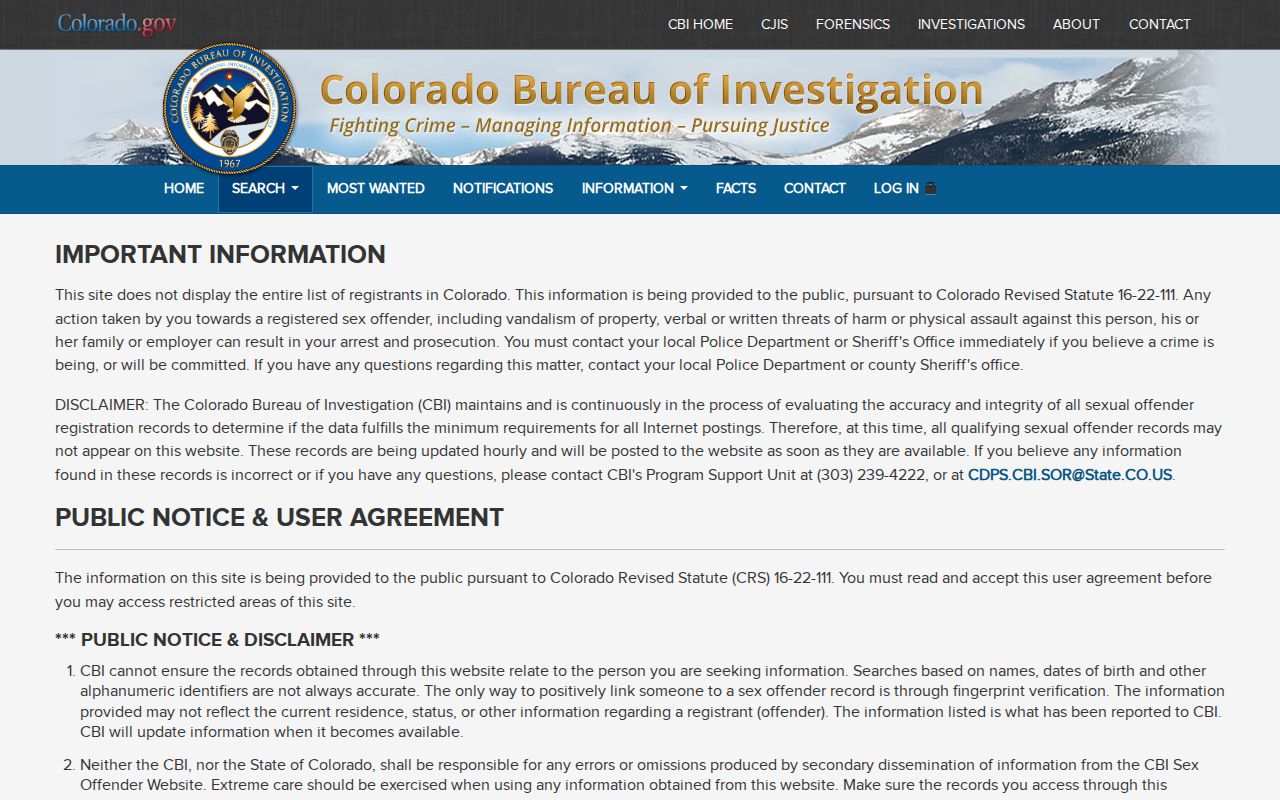
The interface supports a Lincoln County filter, but the resulting list remains the statutory online subset rather than every local registrant.
Lincoln County Registration Office
Where a person lives controls the local registration office. A registrant living within an incorporated city or town generally registers with that local police agency. In Limon, contact Limon Police at 719-775-9211. A person living outside municipal limits registers with the Lincoln County Sheriff’s Office at 103 Third Avenue in Hugo; call 719-743-2846.
Multiple residences require registration in each jurisdiction. The process collects a photograph and complete fingerprints. Local fees may apply, but no official Lincoln County or Limon schedule was found. Call for appointment times, required documents, and the current fee instead of assuming walk-in service.
Lincoln County Sheriff
103 Third Avenue
P.O. Box 10
Hugo, CO 80821
719-743-2846
Limon Police
100 Civic Center Drive
Limon, CO 80828
719-775-9211
Note: Call the agency before visiting because current registration hours and local fees were not posted in the official sources.
Inside a Registry Profile
A Colorado public profile combines reported identity, location, physical-description, and designation fields. Read the date reported along with the address. CBI warns that residence and map information may not be current, and only fingerprints can make a positive identity link.
| Identity | Name, date of birth, gender, race, and available designation information. |
|---|---|
| Photo and description | Photograph, height, weight, hair, eyes, and reported scars, marks, or tattoos. |
| Reported location | Address, county, and the date the information was reported. |
| Offense information | Offense or designation detail supplied for the public listing. |
| Status context | Comments and listing information, including failure-to-register status where applicable. |
Victim information is not released. A profile is for awareness, not a forecast that a person will commit a crime. If a record appears wrong or a person may be non-compliant, send the concern to the agency rather than publishing an accusation.
The official sample profile layout demonstrates the labels used by CBI.
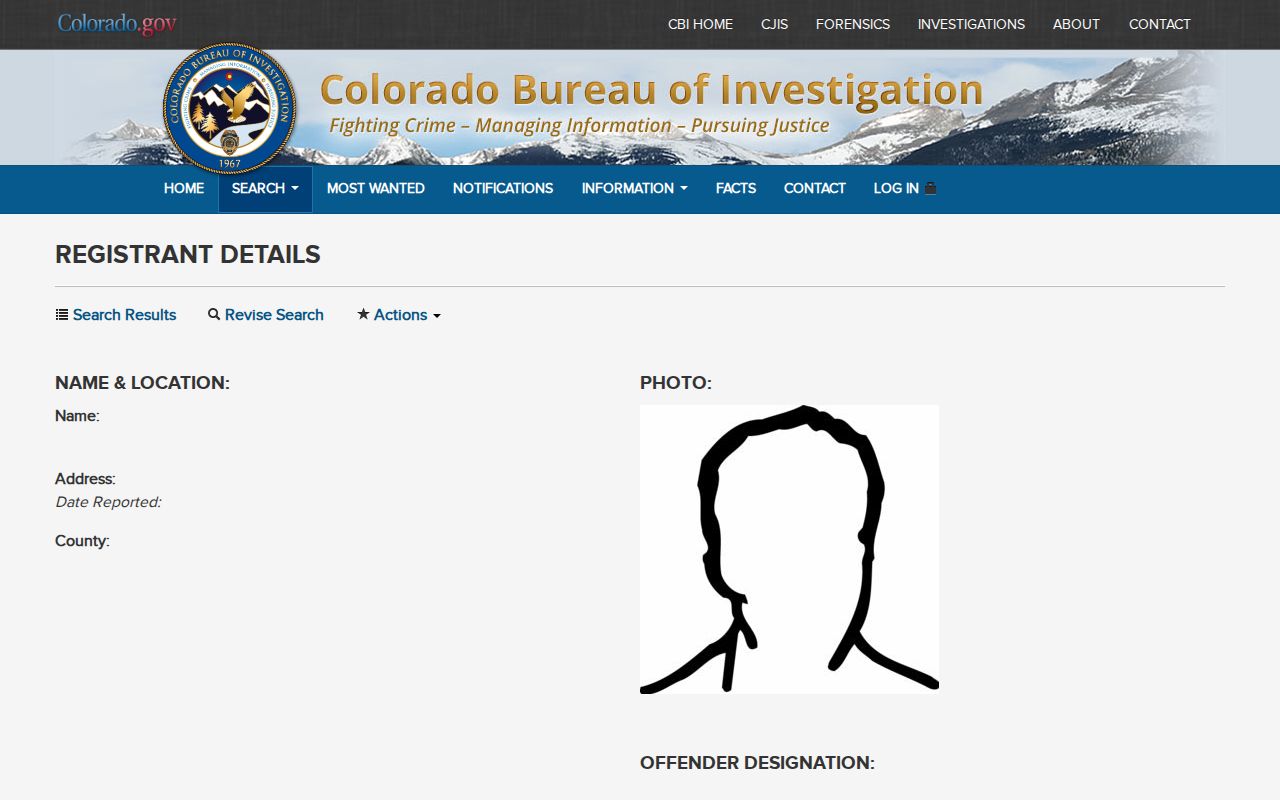
The image is used only to explain the official interface fields, not to reproduce or draw conclusions about a private person.
Lincoln County Verification Schedule
Colorado’s duties vary by offense, designation, residence status, and eligibility for relief. Fixed-residence registrants who are not in a quarterly category generally verify annually within five business days before or after their birthday. A person in a quarterly category verifies more often. Lack of a fixed residence adds separate in-person location checks.
New community registration is generally due within five business days. A person released from CDOC without supervision must register the next business day. These are reporting duties, not promises that each public web profile will change at the same instant.
The CBI registry information page explains registration periods and which categories appear online.
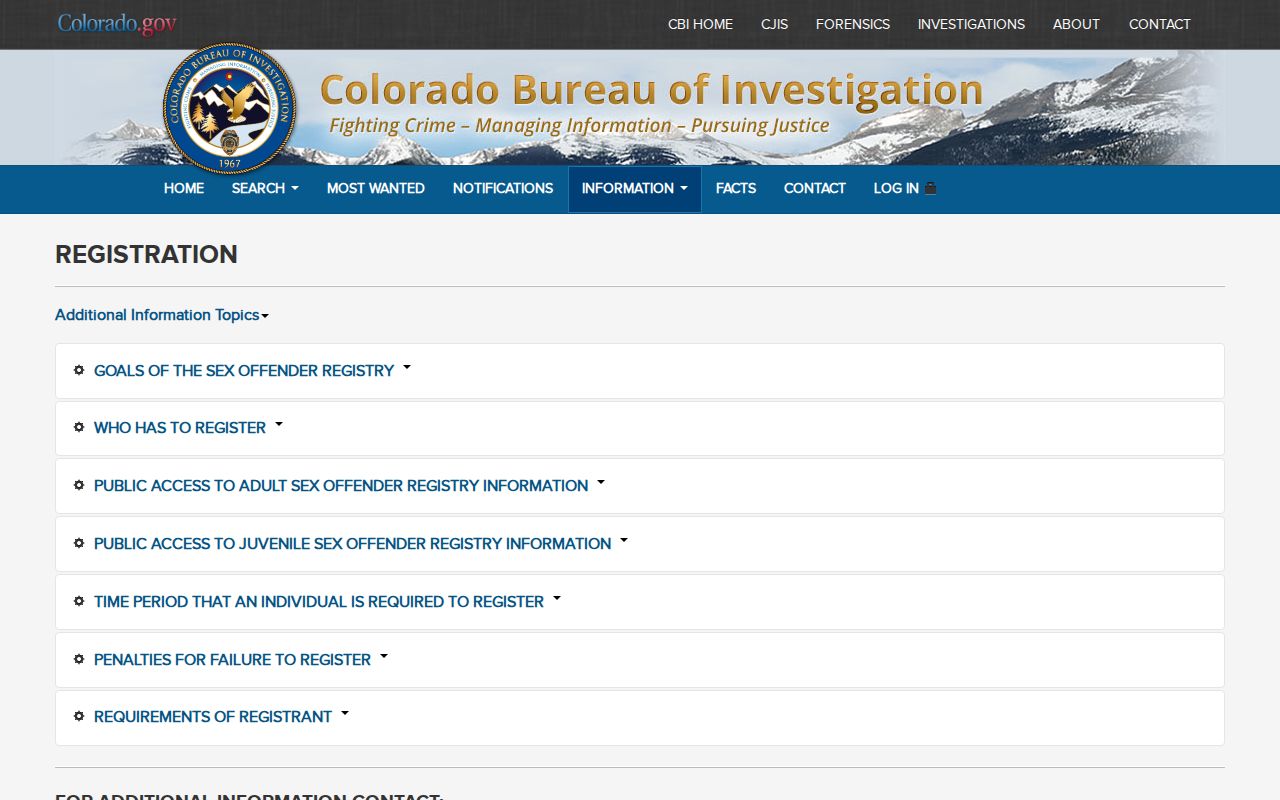
This official overview shows why frequency, duration, and public visibility must be read as separate questions.
Colorado Registration Levels and Requirements
Colorado does not reduce every registration case to a simple public tier label. The statute ties frequency and possible relief to the conviction, designation, release date, and residence status. Some serious categories remain quarterly for life, while other eligible registrants may petition after a set period.
| Category | Duration or relief | Verification |
|---|---|---|
| SVP and specified serious or qualifying quarterly cases | Quarterly for life; listed categories cannot discontinue | Quarterly |
| Other fixed-residence registrants | Until a valid statutory end or court-ordered relief | Annual around birthday |
| Quarterly registrant without fixed residence | Underlying quarterly duty continues | Monthly in-person location verification |
| Annual registrant without fixed residence | Underlying annual duty continues | Every three months in person |
| Eligible class 1-3 felony, not quarterly | May petition 20 years after final release from court jurisdiction | As otherwise required until relief |
| Eligible class 4-6 felony or listed misdemeanor category | May petition after 10 years | As otherwise required until relief |
A petition does not end registration by itself. An eligible person proceeds under C.R.S. §16-22-113, obtains the court’s order, and delivers that order to both the local registration agency and CBI.
Complete Lincoln Adult Registry List
The $20 adult-list request is the correct route when the web subset is not enough. Use CBI’s adult registered-offender list form, describe Lincoln County or the other geographic scope, and submit it by the allowed mail or in-person route. CBI gives a response period of 10 business days.
The form process serves a different need than repeated web searching. It can produce the complete compliant-adult list for the requested area, while the internet display follows C.R.S. §16-22-111’s narrower publication rules. Keep the request result in context: registration alone does not predict a future event, and identity should still be checked with care.
Lincoln Search Beyond Colorado
The U.S. Department of Justice National Sex Offender Public Website, or NSOPW, searches participating jurisdictions beyond Colorado. It is useful when a person may have moved across state lines or when a location near the state border matters. Search limits and publication rules still come from each participating jurisdiction.
Use NSOPW as the cross-state layer, not as a substitute for Lincoln County registration contacts. For a local registration question, use LCSO or Limon Police. For a Colorado program question, contact CBI’s Program Support Unit at 303-239-4222 or cdps.cbi.sor@state.co.us.
Report Lincoln Registration Concerns
A possible failure-to-register location can be reported to CBI at 303-239-5732 or to local law enforcement. Give concrete facts, such as the location and time observed, without confronting the person. For an ongoing or imminent crime, contact police through the appropriate emergency channel.
Registry data can be incomplete or delayed. A map point may not represent a current or valid residence, and a name match is not proof of identity. Let law enforcement compare the report with the nonpublic registration file and fingerprint-linked records.
Community Notification and Lawful Use
The registry supports personal, family, and neighborhood safety planning. It does not authorize punishment by members of the public. CBI prohibits threats, intimidation, harassment, endangerment, retaliation, or property damage based on registry information. The complete-list and juvenile-request processes also carry limits on publication and misuse.
Misuse can be prosecuted: Do not harass, threaten, intimidate, endanger, or retaliate against a registrant or household. False statements or misuse of limited juvenile information may be punished under C.R.S. §18-9-310.5 by up to $1,000 per violation.
Use the reported facts to plan safe conduct, then verify urgent concerns with the agency that maintains the record. Community awareness works best when it is accurate, calm, and lawful.